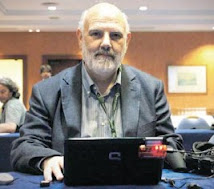
By Manuel Alvarez-Rivera, Puerto Rico
The Swiss Confederation holds a federal parliamentary election on Sunday, October 21, 2007. Voters will choose 199 members of the 200-seat Nationalrat (National Council), the lower house of the Swiss Parliament; in the small canton of Nidwalden, the Free Democratic Party (FDP) candidate had no opponent and was declared elected last September 25.
In addition, elections will take place for 41 of 46 seats in the Council of States, the upper house of Parliament; the cantons of Zug and Appenzell Innerrhoden elected their Council of States members in October 2006 and April 2007, respectively, while FDP and Christian Democratic People's Party (CVP) candidates were elected unopposed last month in the single-seat cantons of Obwalden and Nidwalden. Federal Elections in Switzerland - Elections to the Nationalrat (National Council) has further information on the country's electoral system, with parliamentary election results from 1971 to 2003.
By Western European standards, voter turnout in Swiss parliamentary elections has been decidedly low for many years: since 1979, fewer than fifty percent of the electorate has taken part in successive National Council elections. In fact, among Western democracies only the United States has lower election turnout rates.
Switzerland's low voter turnout in federal elections may be attributed to a variety of factors. First, the country has been ruled for nearly a half-century by a grand coalition of the four major parties - the conservative Swiss People's Party/Democratic Center Union (SVP/UDC), the left-of-center Social Democrats/Socialists (SPS/PSS), the centrist Free Democrats/Radical Democrats (FDP/PRD) and the center-right Christian Democrats (CVP/PDC); despite growing acrimony between them, it is very likely the same four parties will remain in power after the election. In other words, it is not anticipated the upcoming vote will bring about a change of government.
Second, in Switzerland a popular referendum may be held over any bill voted by Parliament; only 50,000 signatures (just over one percent of the electorate) are required to call a referendum: the measure must then be passed by a double majority: a majority of voters in the entire country, and a majority of cantons (the federal states of Switzerland, which are endowed with considerable powers). Constitutional amendments must also be approved by voters. In fact, as little as 100,000 of these (around two percent of the electorate) can propose a constitutional amendment, which must be decided as well by popular referendum, after being debated in Parliament. As such, the electorate can veto any bill passed by Parliament, effectively diluting the power of the legislature.
And third, in Switzerland nationwide referenda are usually held several times a year, resulting in electoral exhaustion; in fact, most referenda are characterized by low turnout rates as well. Nonetheless, it should be noted there were slight voter turnout increases in the 1999 and 2003 federal elections, after having hit an all-time low of 42.2% in 1995.
For most of the 20th century, SPS/PSS, FDP/PRD and CVP/PDC had been Switzerland's three largest parties. However, in the 1999 and 2003 general elections SVP/UDC, until then country's perennial fourth party, made substantial gains at the expense of other right-wing and centrist parties, while the Free Democrats/Radical Democrats and the Christian Democrats declined noticeably. Opinion polls suggest SVP/UDC will remain the largest party, ahead of SPS/PSS, with FDP/PRD and CVP/PDC vying for third place. Meanwhile, the Green Party of Switzerland (GPS/PES) - the largest non-government party - stands to make substantial gains.
As in the 2003 general election, SVP/UDC is running on a nationalist, anti-immigration platform, illustrated by a controversial campaign poster that shows three white sheep, one of which is kicking a black sheep off the Swiss flag; the poster's caption translates as "For Greater Security." In addition, the party is collecting signatures for an initiative to expel foreign criminals from the country. However, one event that could upset all predictions was the riot that took place in Bern last October 6, in which far-left groups disrupted a SVP rally. Although the United Nations' xenophobia watchdog has denounced the SVP/UDC campaign poster as openly racist, the violent incident in the Swiss capital could play to the rightist party's advantage.
Update
Complete election results published by the Swiss Federal Statistical Office's Elections 2007 website show both the right-wing Swiss People's Party/Democratic Center Union (SVP/UDC) and the environmentalist Green Party of Switzerland (GPS) made significant seat gains, mainly at the expense of the centrist Free Democratic Party/Radical Democratic Party (FDP/PRD) and the Social Democratic Party of Switzerland/Swiss Socialist Party, which lost considerable ground. Meanwhile, the Christian Democratic People's Party/Christian Democratic Party (CVP/PDC) picked up additional seats.
With all twenty-six cantons reporting, the distribution of National Council seats in the 2007 federal election is as follows (figures in parentheses show gains or losses with respect to the 2003 federal election): SVP/UDC, 62 (+7); SPS/PSS, 43 (-9); FDP/PRD, 31 (-5); CVP/PDC, 31 (+3); GPS/PES, 20 (+7); Others, 13 (-3). Voter turnout increased to 48.3% - the highest in twenty years.
While it's expected the four major parties will remain in grand coalition, the growth of the Green Party raises the possibility the party may seek representation in the Federal Council, Switzerland's seven-member collegiate presidency. That said, the Greens would need majority support in Parliament in order to secure a seat in the nation's governing body, and that seat would inevitably come at the expense of the other parties.
However, the Greens have called for SVP/UDC to be thrown out of government for failing to follow the highly valued principle of consensus politics. That's rather unlikely to happen, precisely because Swiss politics are based on a broad political consensus, and on that account it would be nearly inconceivable to exclude the largest party from power, particularly in light of its recent election success. Nonetheless, relations between the Swiss People's Party and the other three major parties have been less than cordial as of late, and a Social Democratic-Radical Democratic-Christian Democratic-Green coalition would still command a comfortable fifty-seat majority in the National Council...
Sunday, October 21, 2007
Saturday, October 20, 2007
Swiss Franc Loans and Ageing
by Edward Hugh: Barcelona
With all the fuss there has been in the popular press of late about the so-called Japanese carry trade and its impact on global liquidity (not forgetting, of course, all that attention which has been lavished on those canny Japanese housewifes who seem to have been playing the global markets so well) one important element in this fascinating global phenomenon seems to be in danger of escaping people's notice: the Swiss connection. This post, which accompanies Manuel's electoral posting, will focus on the Swiss carry phenomenon, and will attempt to situate it in the context of the battery of stylised facts which now characterise economic activity in the fastest ageing of our developed societies. Among these now reasonably well established "facts on the ground" are features like weak domestic consumption, growing export dependence, and a generally low internal interest rate environment. As we shall see, these features appear to be just as representative of what has been happening in Switzerland as they are of Japan.
An Ageing Society?
Like Japan, Switzerland is a country which has been aging fairly rapidly in recent years. Switzerlands median age, although not yet up to the heady levels of Germany, Italy and Japan (each around 43) has been climbing steadily, and is currently somewhere around 40.4.
This tendency to borrow in Swiss Francs is not, however, restricted to East Europeans, as Nils Bernstein notes in this report for the BIS on the Danish economy, the Danish farmers have also been at it:

As can be seen from the above chart, Swiss Franc denominated loans have been steadily rising in Denmark since 2001. Nils Bernstein makes the following observations:

In the second place, annual growth rates for these loans spiked sharply at the turn of the century and since that time the rate of arrival of new demand has declined significantly (this turning point coincides, of course, with the introduction of the euro, and interestingly enough Denmark is not part of the eurosystem).

In the third place we should note the way in which outstanding loans to Austrian citizens in non-domestic currency have increased (and continue to increase) as a percentage of Austrian GDP, and of total household debt:

Finally, Swiss Franc loans massively predominate in the Austrian foreign currency loan market:

As the IMF notes this was essentially a refinancing - rather than a construction - boom:
Another interesting question to ask is just how did all of this got started, since evidently there may be lessons here for the spread of such practices in the East of Europe, and, of course, the fact that chart for the growth of foreign currency denominated loans is surprisingly reminiscent of the sort of S shaped curves which were so evident in the spread of the use of mobile phones is very revealing.
Well, apparently:
Now this taste for Swiss Franc denominated loans in Austria is interesting, since as Chapter 3 of the 2007 issue of the IMF Selected Issues Austria (which is devoted to Cross-border Banking Issues for the Austrian Banks and their Supervisors) tells us:
In other words the Austrian banks have leveraged expertise they developed for external currency loans based on an initial wave of domestic demand to gain a comparative advantage in a much larger market.

As the IMF author also goes on to note, the exposure of the Austrian banking system to any carry-trade "unwind" type development is thus proportionately much higher than that of virtually anyone else, a situation which becomes very clear when you look at the following chart:

To conclude, and returning now briefly to Switzerland, the IMF had a 2005 issue of Selected Issues Switzerland which examined a lot of the longer term demographic issues which Switzerland faces. According to this document:
"The full force of aging is projected to be felt from 2015 onward."
In relative terms this isn't a very long time horizon. The following is also worthy of note:
In fact GDP growth rates in Switzerland appear to have peaked in the 1980's at an average rate of 2.1%. In the 1990s Switzerland's GDP grew at an average rate of 1.1%, and between 2000 and 2004 GDP growth averaged 1.3% annually. A similar pattern can be seen in the total number of hours worked, which rose at an annual average rate of 1.1% in the 1980s, falling to a 0.1% annual rate of increase in the 1990s and FELL by an annual rate of 0.1% in the 2000 to 2004 period.
The Swiss also tend to save significantly. As the IMF notes:
At this stage of my analysis quite what element in this saving is population age-related, and quite what is cultural-behavioural is far from clear. This is a theme I will try to follow up on as and when time permits.
In the meantime what I have tried to draw attention to in this post is the situation vis-a-vis the Swiss Franc carry trade in Eastern and Central Europe, the role and exposure of Austrian banks in this trade, and the striking feature that Switzerland is a fairly "elderly" society. In this context the comparison with Japan simply jumps out at you. Now, as I have said above, these two economies are at one and the same time similar and different (in terms of the structural features they present). All that can be prudently said here is that what has actually been going on in Switzerland in recent years bears closer examination to try to discover what may be learnt.
With all the fuss there has been in the popular press of late about the so-called Japanese carry trade and its impact on global liquidity (not forgetting, of course, all that attention which has been lavished on those canny Japanese housewifes who seem to have been playing the global markets so well) one important element in this fascinating global phenomenon seems to be in danger of escaping people's notice: the Swiss connection. This post, which accompanies Manuel's electoral posting, will focus on the Swiss carry phenomenon, and will attempt to situate it in the context of the battery of stylised facts which now characterise economic activity in the fastest ageing of our developed societies. Among these now reasonably well established "facts on the ground" are features like weak domestic consumption, growing export dependence, and a generally low internal interest rate environment. As we shall see, these features appear to be just as representative of what has been happening in Switzerland as they are of Japan.
An Ageing Society?
Like Japan, Switzerland is a country which has been aging fairly rapidly in recent years. Switzerlands median age, although not yet up to the heady levels of Germany, Italy and Japan (each around 43) has been climbing steadily, and is currently somewhere around 40.4.

This rising median age is the product of both 35+ years of sustained below-relacement fertiliy, and a steadily rising life expectancy.

Switzerland has also had a reasonable inward flow of migrants in relation to its total population over the last decade, with around 35,000 - 40,000 people settling in the country annually.
The end product of the inward migration and greater life expectancy is that, despite very low fertility rates over a long period of time, the Swiss population still continues to rise slowly, even while it ages.
The Economics Of An Ageing Population
Well, if we now come to examine the economic implications of this long term demographic transformation that is taking place in Switzerland, it should not surprise us at all to find that, as in the case of other elderly societies like Germany and Japan, domestic consumption is now no longer an especially strong driver of GDP growth, and exports have to take a growing share of the weight. Actually GDP growth has been neither exceptionally stellar nor exceptionally poor in Switzerland, and since the start of the century it has averaged in the region of a 1.9% annual rate.
The consumption share in Swiss GDP is way below the levels in the construction boom societies like Spain, Ireland, the United States or Australia, and has remained reasonably constant at around 58% share.
The actual annual rate of growth in private consumption has, since the early ninetees, been very weak, averaging only 0.9% per year since 1990.
At the same time Switzerland has maintained a healthy balance of payments surplus, with the surplus averaging around 6% of GDP since 2000:
Switzerland also runs a very large and substantial current account surplus too.
So Switzerland is, in a way, a very typical elderly and ageing society, following the pattern which we have been able to observe in the case of Germany and Japan with a strong balance of payments surplus, relatively flat internal demand, and a long lasting dependence on export growth for obtaining overall GDP growth. This comparative weakness in internal demand also has had the consequence of producing a fairly low inflation internal environment (Swiss inflation has averaged around 1% per annum since 2000), and Switzerland as a consequence has "enjoyed" comparatively high levels of internal liquidity and comparatively low central bank domestic interest rates (the rate which is currently at 2.79% is, incredible as this may seem to some quite high for Switzerland, due to the fact that interest rates have been under a fair amount of upward pressure recently). The Swiss central bank normally tries to "steer" its overnight rate value within a band which is set around the 3 month CHF libor rate:
Obviously, looking at the above chart it isn't hard to note the impact of the "financial turmoil" which set in in mid August, but which now, in the case of the Swiss banking sector, seems to have more or less calmed down again (something which may not be said of the eurozone banking sector at this point).
If we look at a longer-term time series, we will see that between 2002 and 2006 Swiss interest rates were incredibly low, in a way which is amazingly reminiscent of the recent path Japanese interest rates.
As I have attempted to argue above, this similarity between Switzerland and Japan may be rather more than incidental since the underlying demographic profile is not that disimmilar. If we look at a chart for the key 25 to 49 age group, we will see that in Switzerland this group "peaked out" at around 39% of the total population between 1992 and 1995, and has been declining steadily in relative importance since that time.
The macroeconomics of why this age group is important, and why its peaking-out is a significant moment in economic terms is in fact rather straightforward. The moment of maximum 25-to-49 age group share could be thought of as the moment of maximum capacity and growth potential for any given economy. This is basically the case for two reasons. In the first place the 24 to 49 age group includes the crucial 25 to 49 household-former, first-time-homebuyer group. In terms of credit expansion, it is this group which drives a significant part of internal demand, since this is the group with the greatest propensity to borrow forward, and this is vital.
One reflection of this which can quickly be noted in the Swiss case is the comparatively low share of construction activity in the Swiss economy. Construction has in fact been increasing ever so slightly in recent years, but still is down in the 4% of GDP range:
The 25 to 49 age group also includes another important group for economic analysis, the 35 to 50 one. It is this group which drives an economy in productive terms, since these are the prime age workers. If you think of a society as a 100 metres sprint athlete, then there is an age when this athlete is at the maximum of his or her running potential, an age after which, and with the passage of time, they can only run the 100 metres more and more slowly. Well a society is the same in terms of its collective economic potential, after the 25 to 49 age group peaks an economy can only move forward more slowly, and evidently, unless the situation is addressed via either increased fertility or greater immigration, the pace becomes progressively slower as the 25 to 49 age group declines inexorably as a % of the total population.
Swiss Roll-over in Eastern Europe
Well, going back to our central topic here, which is, let us not forget, the role of Switzerlands low interest rates in stimulating a carry trade, and the impact of this carry trade in the Emerging Economies in Eastern Europe, what we need to note is that there has been a growing tendency in some parts of Central and Eastern Europe - and especially since the turn of the century - to contract loans which are denominated in Swiss Francs.
What now follows is a brief account of what we know about the current extent of this phenomenon, and about the prominent role which the Austrian banking sector seems to play in it . At the end of the post I return to the issue of Switzerland as an elderly economy with specific structural problems, problems which lead Switzerland to play such a leading role - one is both distict from yet similar to that played by Japan - in the carry trade phenomenon.
The use of Swiss franc denominated loans has become a widespread phenomenon in Eastern Europe. In Hungary, to take one important example, over 80% of all new home loans and half of small business credits taken out since early 2006 have been in Swiss francs. A similar pattern of heavy dependence on foreign currency denominated loans is to be found in Croatia, Romania, Poland, and the Baltic States, although the mix between francs, euros, and the yen varies from country to country.
The fashion for borrowing in Swiss francs really took off in Eastern Europe when Swiss National Bank dropped interest rates to 0.75% in order to stave-off a perceived deflation threat, turning Switzerland in the process into the cheapest source of loan capital in Europe. External lending in Swiss francs reached $643 billion in 2006, according to data from the Bank for International Settlements . The huge scale of the borrowing in fact drove the Swiss franc to a nine-year low against the euro, and has lead to an accelerating slide in its value over the last two years - even though by this point the Swiss National Bank had been busy raising rates (Swiss interest rates have now been increased 7 times since the 2003 trough). The extreme weakness in the Swiss Franc is in fact rather perverse (shades of Japan, of course, here), since currently Switzerland enjoys the highest current account surplus in the developed world (some 17.7% of GDP in 2006). At the same time the Swiss hold more than $500 billion in net foreign assets, making them in these terms the wealthiest nation on earth.
A recent issue of the Bank for International Settlements publication Highlights of International Banking and Financial Market Activity has some revealing comments on the Swiss situation(the data used for the report came from 2006):
Total cross-border claims of BIS reporting banks expanded by $1 trillion in the last quarter of 2006. After more modest growth in mid-2006, a pickup in interbank claims accounted for 54% of this expansion. A surge in credit to nonbank entities contributed $473 billion, pushing the stock of cross-border claims to $26 trillion, 18% higher than in late 2005.So, although the BIS find "little evidence in the cross-border data of unusual borrowing in Swiss francs that might correspond to Swiss franc-denominated retail lending", they do make an exception in the cases of Hungary and Croatia, where they note that lending in Swiss francs to retail clients reaches over 10% of the total retail loans in those countries, and indeed, as I indicate above, swiss franc loans now seem to account for over 80% of new housing related credit in Hungary.
The flow of credit to emerging markets reached new heights through the year 2006. Claims on emerging markets grew by $96 billion in the final quarter of 2006, bringing the volume of new credit throughout the year to $341 billion. This amount exceeded previous peaks ($232 billion in 2005 and $134 billion in 1996), both in nominal value and in terms of growth. The current annual growth rate has risen to 24%, having surpassed for the sixth consecutive quarter the previous peak of 17% recorded in early 1997.
Emerging Europe overtook emerging Asia as the region to which BIS reporting banks extend the greatest share of credit. Since 2002, growth in claims on the region has consistently outpaced that vis-à-vis other regions. With a record quarterly inflow, emerging Europe received over 60% of new credit to emerging markets, bringing its share in the stock of emerging market claims to 34%. Less of the new credit went to the major borrowers (Russia, Turkey, Poland and Hungary) than to a number of smaller markets, notably Romania and Malta, as well as Ukraine, Cyprus, Bulgaria and the Baltic states.
The currency denomination of cross-border claims on emerging Europe tilted further towards the euro. In the stock of claims outstanding, the euro and dollar shares were 44% and 31%, respectively, but the gap in the latest flow data was more pronounced (61% and 5%). While the sterling share has remained close to 1%, the yen has lost ground to the Swiss franc, thus continuing a trend seen over the last six years. Yet there is little evidence in the cross-border data of unusual borrowing in Swiss francs that might correspond to Swiss franc-denominated retail lending in several countries. Borrowing in the Swiss currency remains on average below 4% of cross-border claims, and exceeds 10% only in Croatia and Hungary.
Nearly 20% of reporting banks’ foreign claims were in the form of funds channelled to emerging market borrowers. Claims on residents of emerging Europe continued to account for the largest share of these funds.
This tendency to borrow in Swiss Francs is not, however, restricted to East Europeans, as Nils Bernstein notes in this report for the BIS on the Danish economy, the Danish farmers have also been at it:

As can be seen from the above chart, Swiss Franc denominated loans have been steadily rising in Denmark since 2001. Nils Bernstein makes the following observations:
Now the following charts make all of this even clearer. Firstly loans to Austrian households in foreign currency have risen sharply, and the process really took off in the mid 1990s:In our case, the strategy is pursued by private borrowers, often farmers it is said, who raise loans in Swiss francs rather than in Danish kroner. A lower level of interest rates for Swiss than for Danish instruments makes this advantageous, at any rate for as long as the Swiss franc does not strengthen excessively against the krone.
The banks’ lending to households in Swiss francs has risen steadily since 2001 and today totals almost kr. 20 billion. During 2006 the increase in Swiss franc lending flattened out, however, and by the end of the year the net lending was negative. At the same time, the Swiss franc had weakened to its lowest level against the Danish krone for 8-9 years. The decline in net lending may be due to expectations that the Swiss franc would rally. This is confirmed by statistical analyses of data for a large number of years. The analyses find significant correlation between a weaker Swiss franc and diminishing net lending.
It is interesting that the Danish carry speculators show a different reaction pattern to the yen carry speculators. The yen carry speculators leave their positions when the yen strengthens, apparently fearing that the strengthening forewarns an imminent stronger adjustment of the exchange rate. Our domestic Swiss franc speculators increase their positions when the franc strengthens, apparently believing the strengthening to be temporary.
So what else has been going on in Europe involving the Swiss Franc? Well, from the outside this is very hard to determine, although in this connection the 2005 issue of the IMF publication Selected Issues Austria makes very interesting reading. Chapter two focuses on the growth of Swiss Franc denominated mortgages in Austria in the 1990s and is entitled - "What Explains the Surge of Foreign Currency Loans to Austrian Households?". The chapter was prepared by Dimitri Tzanninis, and in it you can read:Following years of relative stability, foreign currency loans to Austrian households entered a phase of explosive growth around 1995. Even though their growth has moderated since 2001, foreign currency loans still account for about half the growth of total credit to households. By end-March 2005, 30 percent of outstanding loans to households were in foreign currency, compared with about 5 percent for the euro zone. Nearly all these loans are in Swiss francs and, to a lesser extent, Japanese yen. The vast majority of these loans finance domestic transactions. The popularity of foreign currency loans among households is a uniquely Austrian phenomenon in the euro zone.

In the second place, annual growth rates for these loans spiked sharply at the turn of the century and since that time the rate of arrival of new demand has declined significantly (this turning point coincides, of course, with the introduction of the euro, and interestingly enough Denmark is not part of the eurosystem).

In the third place we should note the way in which outstanding loans to Austrian citizens in non-domestic currency have increased (and continue to increase) as a percentage of Austrian GDP, and of total household debt:

Finally, Swiss Franc loans massively predominate in the Austrian foreign currency loan market:

As the IMF notes this was essentially a refinancing - rather than a construction - boom:
The boom in these loans appears to be reflecting currency substitution rather than a lending boom. Growth of credit to households (in all currencies) has been relatively subdued (second panel of Figure 1), suggesting that a considerable part of the growth of foreign currency loans has been the result of refinancing. Indeed, because of refinancing of previous schilling or euro loans, the contribution of foreign currency loans to the annual growth of total loans to households approached or exceeded 100 percent in six consecutive quarters beginning in late 1998.
Another interesting question to ask is just how did all of this got started, since evidently there may be lessons here for the spread of such practices in the East of Europe, and, of course, the fact that chart for the growth of foreign currency denominated loans is surprisingly reminiscent of the sort of S shaped curves which were so evident in the spread of the use of mobile phones is very revealing.
Well, apparently:
The practice of borrowing in foreign currency (mainly Swiss francs) began in the western part of the country, where tens of thousands of Austrians commute to work in Switzerland and Liechtenstein. This partly explains why the share of these loans was higher in Austria, even during the 1980s. Word of mouth and aggressive promotion by financial advisors helped spread the popularity of these loans to the rest of the country. By the mid-1990s, newspaper ads placed by banks began to appear, fueling public interest (text figure). Another factor facilitating the spread of these loans could be the belief in the stability of the exchange rate deriving from Austria’s hard currency policy (a peg of the schilling to the deutsche mark) since 1980.6 The success of this policy may have created a psychology of an exchange rate immune from risks, notwithstanding the appreciation of the Japanese yen and, to a lesser extent, the Swiss franc since the mid-1980s.
Now this taste for Swiss Franc denominated loans in Austria is interesting, since as Chapter 3 of the 2007 issue of the IMF Selected Issues Austria (which is devoted to Cross-border Banking Issues for the Austrian Banks and their Supervisors) tells us:
Austrian banks play a major role in many countries in Central, Eastern, and Southeastern Europe (CESE). Almost all of the large Austrian banking groups have subsidiaries in several countries in CESE. In quite a few cases, these subsidiaries are large compared with the host country’s financial systems. Moreover, some of these subsidiaries would probably be judged to be of systemic importance to the financial systems in the host countries. At the same time, the holdings in the CESE are important for the Austrian banks, as they represent a significant part of total assets and provide a major contribution to overall profitability.
In other words the Austrian banks have leveraged expertise they developed for external currency loans based on an initial wave of domestic demand to gain a comparative advantage in a much larger market.
The Austrian financial system is dominated by the banking sector. At roughly 300 percent of GDP, total banking sector assets are far larger than those of insurance companies and pension funds. Mutual fund assets and stock market valuation have increased considerably over the last five years, but also remain small compared with the banking sector. Domestic credit provided by Austrian banks is in line with levels elsewhere in Europe.
In the early 1990s, Austrian banks were among the first to enter the Central and Eastern European (CEE) market. During that period, driven by geographical proximity, historical ties, and a saturated domestic market, most of the larger Austrian banks moved into the region. Generally, expansion started in Hungary and (then) Czechoslovakia. From there on, expansion continued, and currently comprises virtually all CEE markets. More recently, Austrian banks have entered Southeastern Europe and the CIS. Between 2003 and 2005, their expansion led to increases in domestic market shares in almost all of CESE, with the increases in Romania and Bosnia and Herzegovina especially large. Some Austrian banks have expanded further east by entering the market in some of the CIS countries, most notably in Russia and Ukraine.

As a consequence, Austrian banks now own subsidiaries that are of key importance in several of the host countries in CESE. Even though Austrian banks are not large by international standards, their CESE subsidiaries are of considerable size. As the host countries are emerging markets, their financial systems are generally small by international comparison, and their financial markets are still deepening. As a consequence, some of the Austrian-owned subsidiaries are large in relation to the size of the financial systems of the host countries and could be considered of systemic importance.
As the IMF author also goes on to note, the exposure of the Austrian banking system to any carry-trade "unwind" type development is thus proportionately much higher than that of virtually anyone else, a situation which becomes very clear when you look at the following chart:

To conclude, and returning now briefly to Switzerland, the IMF had a 2005 issue of Selected Issues Switzerland which examined a lot of the longer term demographic issues which Switzerland faces. According to this document:
"The full force of aging is projected to be felt from 2015 onward."
In relative terms this isn't a very long time horizon. The following is also worthy of note:
The rapid increase in the number of pensioners in relation to the working-age population has been remarkable. This is related to the increasing generosity of the social security system, not aging itself, and the tendency to contain long-term unemployment during the protracted stagnation of the 1990s. Since 1990, the number of pensioners increased by 35 percent while persons over 65 by only 17 percent. Still, early retirement has been less prevalent in Switzerland than in other industrial countries.
In fact GDP growth rates in Switzerland appear to have peaked in the 1980's at an average rate of 2.1%. In the 1990s Switzerland's GDP grew at an average rate of 1.1%, and between 2000 and 2004 GDP growth averaged 1.3% annually. A similar pattern can be seen in the total number of hours worked, which rose at an annual average rate of 1.1% in the 1980s, falling to a 0.1% annual rate of increase in the 1990s and FELL by an annual rate of 0.1% in the 2000 to 2004 period.
The Swiss also tend to save significantly. As the IMF notes:
"the thrifty Swiss households save about 10 percent of their disposable income and also have accumulated significant private assets."
At this stage of my analysis quite what element in this saving is population age-related, and quite what is cultural-behavioural is far from clear. This is a theme I will try to follow up on as and when time permits.
In the meantime what I have tried to draw attention to in this post is the situation vis-a-vis the Swiss Franc carry trade in Eastern and Central Europe, the role and exposure of Austrian banks in this trade, and the striking feature that Switzerland is a fairly "elderly" society. In this context the comparison with Japan simply jumps out at you. Now, as I have said above, these two economies are at one and the same time similar and different (in terms of the structural features they present). All that can be prudently said here is that what has actually been going on in Switzerland in recent years bears closer examination to try to discover what may be learnt.

Subscribe to:
Posts (Atom)